Incessant Novelty and the Death of Wonder
Why Constant Stimulation Cannot Satisfy the Soul
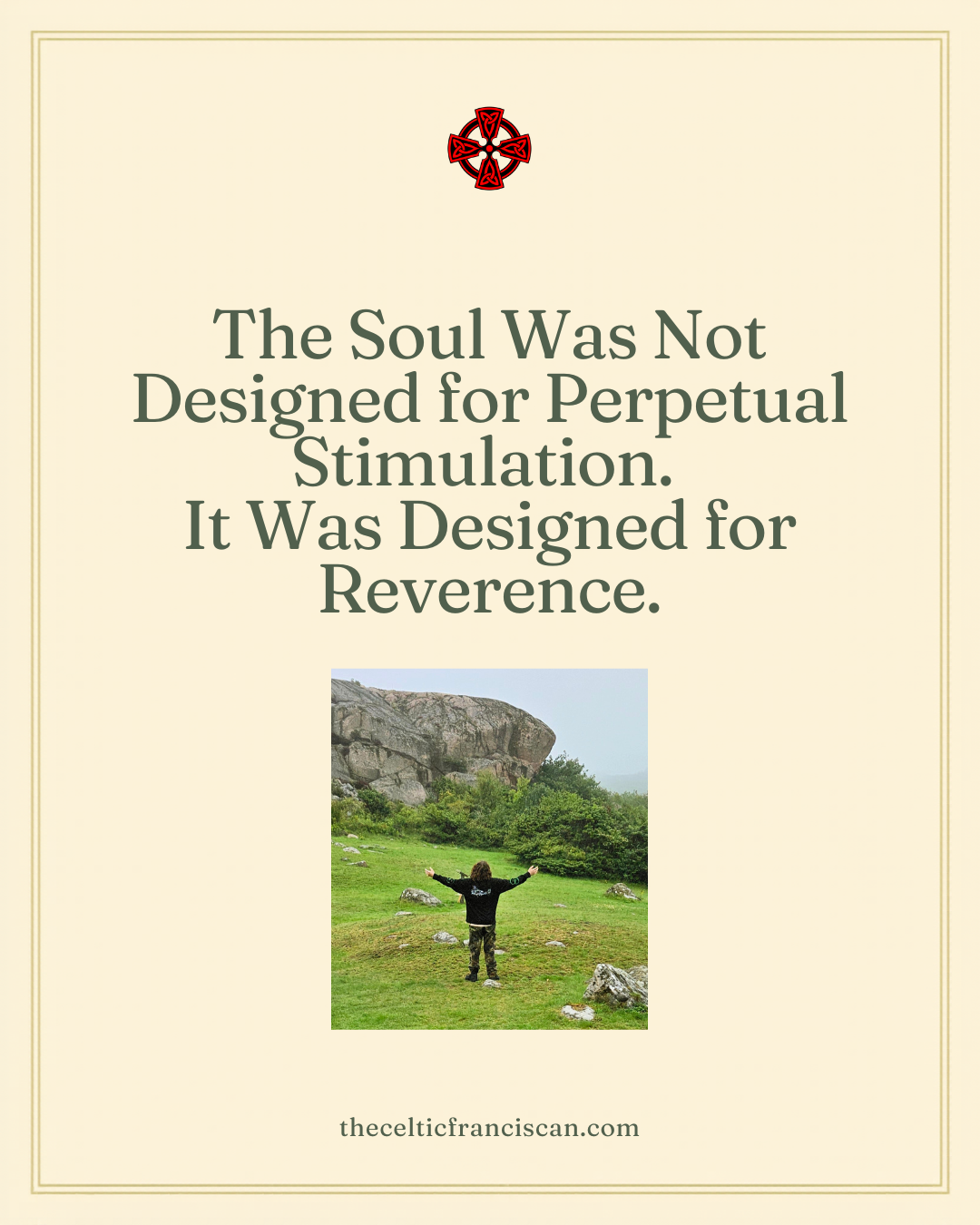
The soul was not designed for perpetual stimulation. It was designed for reverence.
That may be one of the most countercultural sentences we can speak in the age of artificial intelligence, smartphones, social media, breaking news, productivity hacks, algorithmic outrage, and the endless scroll.
We live in a world that has confused novelty with wonder.
Novelty says, “Look at this next thing.”
Wonder says, “Stay long enough to truly see.”
Novelty keeps the mind restless.
Wonder makes the soul spacious.
Novelty feeds appetite.
Wonder awakens reverence.
And the machine, bless its little silicon heart, is very good at novelty.
It can generate new images, new summaries, new songs, new arguments, new recommendations, new outrage, new distractions, new reasons to keep clicking, scrolling, reacting, and consuming. It can give us more and more and more.
But the soul is not healed by more.
The soul is healed by depth.
The Age of Perpetual Interruption
Modern life rarely asks us to be present. It asks us to be available.
Available to messages.
Available to notifications.
Available to outrage.
Available to headlines.
Available to comparison.
Available to productivity.
Available to every small electronic summons from the glowing rectangle in our pocket.
We are constantly reachable, but not always truly present. We are informed, but not necessarily wise. We are entertained, but not necessarily joyful. We are connected, but not always in communion.
This is the quiet spiritual cost of perpetual stimulation.
The nervous system adapts to interruption. The mind becomes trained to skim. The heart becomes impatient with silence. The soul begins to mistake stillness for boredom, solitude for loneliness, and reverence for inefficiency.
In such a world, contemplation feels almost rebellious.
To sit quietly without producing anything is a protest.
To look at a tree without photographing it is a protest.
To listen to another person without preparing your reply is a protest.
To pray without demanding immediate results is a protest.
To walk slowly beneath the sky and remember you are not a machine is a protest.
And a holy one.
Novelty Is Not Wonder
Novelty is not evil. Newness can be beautiful. Creativity requires surprise. The Spirit blows where it will, and God is endlessly capable of fresh revelation.
But novelty becomes dangerous when it replaces wonder.
Novelty asks for reaction.
Wonder asks for attention.
Novelty is brief.
Wonder deepens.
Novelty consumes the next thing.
Wonder beholds this thing.
Novelty says, “I am bored.”
Wonder says, “I have not yet learned how to see.”
Wonder requires stillness long enough for reality to become luminous again.
That is the problem. We do not often stay long enough.
We move too quickly from thing to thing, person to person, idea to idea, crisis to crisis, outrage to outrage. We are becoming experts in motion and amateurs in presence.
But the sacred rarely shouts.
The sacred waits to be noticed.
The Franciscan Way of Seeing
Francis of Assisi did not move through the world as a consumer of objects. He moved through the world as a brother among brothers and sisters.
Brother Sun.
Sister Moon.
Brother Fire.
Sister Water.
Sister Mother Earth.
This was not sentimentality. It was spiritual perception. Francis saw creation not as scenery, commodity, or raw material, but as kin. Reality was alive with relationship. The world was not a warehouse of useful things. It was a communion of gifts.
That kind of seeing requires a slower soul.
You cannot behold Brother Sun while doomscrolling.
You cannot receive Sister Water while rushing past the river.
You cannot encounter the person in front of you while mentally composing your next performance.
You cannot hear the still small voice while every device in your life is screaming for managerial rights over your attention.
Franciscan spirituality invites us to recover reverence.
Not as nostalgia.
Not as escape.
Not as anti-technology performance art for people who secretly still love good Wi-Fi.
Reverence is not rejection of the world. It is a deeper participation in it.
AI and the Acceleration of the Surface
Artificial intelligence intensifies the challenge because it can produce novelty at a scale human beings have never encountered.
New content can now appear faster than we can digest meaningfully. The machine can generate images before we have contemplated beauty. It can generate words before we have listened for wisdom. It can generate spiritual-sounding language before we have entered silence. It can simulate intimacy before we have done the slow, vulnerable work of communion.
The danger is not simply that AI can make things.
The danger is that AI can feed our addiction to surface.
More content.
More stimulation.
More productivity.
More reaction.
More imitation of depth without the suffering, patience, and love that depth requires.
But human beings are not formed by content alone.
We are formed by attention.
We are formed by practice.
We are formed by love.
We are formed by silence.
We are formed by community.
We are formed by what we return to again and again.
The question is not only, “What can this technology do?”
The deeper question is, “What kind of person am I becoming as I use it?”
Reverence as Human Resistance
Reverence is a way of refusing to let the world become flat.
It says creation is not merely data.
A body is not merely biology.
A child is not merely potential productivity.
A tree is not merely lumber.
A meal is not merely calories.
A conversation is not merely information exchange.
A prayer is not merely self-regulation.
A human being is not merely a user.
Reverence restores depth to the ordinary.
The cup of coffee becomes warmth and gratitude.
The morning light becomes mercy.
The face across the table becomes mystery.
The breath in your lungs becomes gift.
The ground beneath your feet becomes holy enough to