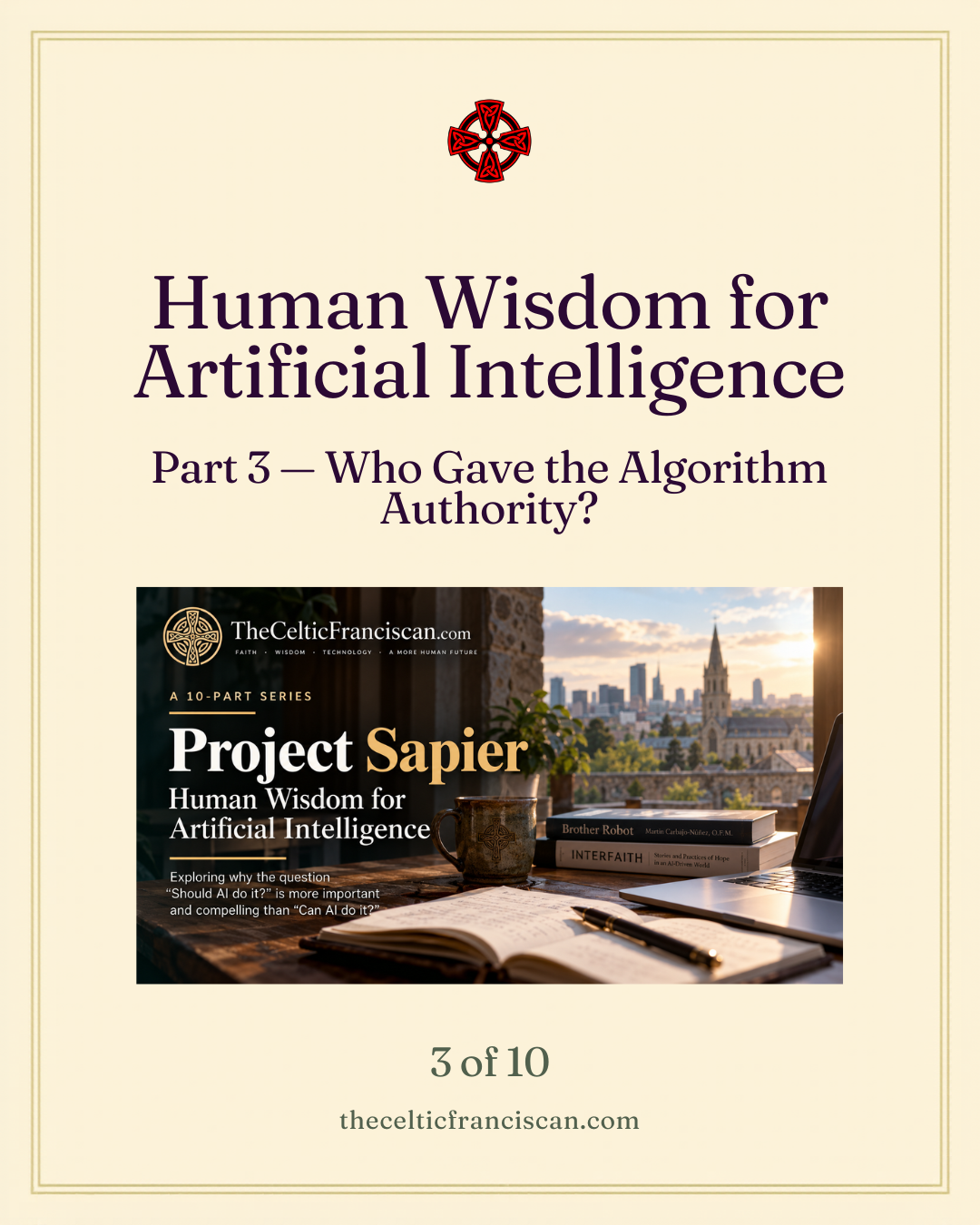
Human Wisdom for Artificial Intelligence
Part 3 — Who Gave the Algorithm Authority?
Every technology redistributes power, and AI is no exception. When an algorithm influences who gets hired, which customer receives attention, which employee is flagged, which application is reviewed, or which person is considered a risk, authority has moved somewhere, even if the organization never explicitly discussed it.
One of the strongest themes in Brother Robot is that AI systems should remain transparent, contestable, correctable, and subject to human responsibility. Carbajo-Núñez warns against technological systems becoming forms of unchallengeable power.
That leads to some very practical questions. Can a person challenge the system’s conclusion? Can someone explain why the recommendation was made? Can a human intervene? Who authorized the system’s use? Who owns the outcome if it is wrong?
This is where what I call responsibility evaporation becomes dangerous. Management blames the vendor. The vendor blames the model. The model is said to reflect the data. The process becomes so distributed that no one seems responsible anymore, even though a real person still lives with the consequences.
Project Sapier argues that consequential decisions require identifiable human accountability. Technology may assist a judgment, but it should not become a hiding place for responsibility.
If an organization cannot clearly answer, “Who owns this outcome?”, then it probably has more work to do before scaling the system.
Explore the framework:
https://thecelticfranciscan.com/project-sapier/