Project Sapier
Human wisdom for artificial intelligence.
AI is getting smarter. The harder question is whether we are becoming wiser. Project Sapier helps business leaders examine AI before efficiency quietly becomes authority, automation becomes dependency, or simulation replaces human relationship.
Most AI decisions are being made too narrowly.
Businesses ask what can be automated, how quickly it can be deployed, and what it will save. Useful questions—but not sufficient ones.
Does this use of AI increase or diminish human flourishing?
Examine consequences for employees, customers, trust, dignity, agency, accountability, community, and the wider world.
Examinable AI.
AI should be understandable enough to question, governable enough to constrain, and accountable enough that a responsible human remains answerable.
Before you automate it, can you explain it, defend it, govern it—and live with what it does to people?
Move AI from experimentation to governed business use.
Project Sapier helps owners, executives, and boards surface AI risks early—before they become security incidents, customer trust failures, employee disputes, vendor surprises, or expensive remediation projects.
Data, IP & security
Where is sensitive data going? What is retained? What can leak, be manipulated, or be exposed through prompts, integrations, vendors, or agents?
Operational & vendor risk
What happens when a model changes, a vendor fails, an agent acts outside expectations, or a critical workflow becomes dependent on opaque automation?
People & decision risk
Where does AI influence hiring, performance, pricing, customer treatment, access, reputation, or other consequential outcomes—and where must humans remain accountable?
Trust, reputation & oversight
Could leadership explain the system to an employee, customer, board member, auditor, regulator, insurer, or community stakeholder after something goes wrong?
Know where AI is. Know who owns it. Know what evidence you have.
A Sapier review is designed to produce a practical risk register, accountable owners, recommended controls, and a documented path for escalation—so AI governance becomes part of normal business governance.
A business-friendly on-ramp to Govern, Map, Measure, and Manage.
The NIST AI Risk Management Framework (AI RMF 1.0) organizes AI risk management around four functions: GOVERN, MAP, MEASURE, and MANAGE. Project Sapier uses those same risk-management instincts in plain business language while adding an explicit human-flourishing lens.
NIST's AI RMF is voluntary, not a certification standard, and NIST is currently revising AI RMF 1.0. Its Generative AI Profile adds guidance for risks specific to generative AI. Sapier is intended to help leadership prepare for stronger governance conversations and organize evidence—not to claim NIST certification or legal compliance.
RISK
MANAGEMENT
Six areas of social life AI is already changing
Project Sapier asks leaders to look beyond software functionality and examine the wider system their technology is helping create.
Epistemology
What will people believe because of this system? How will we distinguish information, knowledge, and wisdom?
Politics
Who gains authority? Who can challenge a decision? Who remains accountable?
Economics
Who receives the value created by AI, and who bears displacement, cost, or risk?
Culture
What behavior, values, and assumptions will this technology normalize inside the organization?
Ecology
What material, energy, infrastructure, and environmental costs sit behind the digital service?
Communication
Is AI strengthening human relationship—or becoming a substitute for presence, listening, responsibility, and trust?
Know it. Question it. Govern it.
The 15-Minute AI Examination
Choose one meaningful AI use case in your organization. Answer all 15 questions with Yes, Unsure, or No. The questions are designed as an executive screening layer for governance gaps that can feed a deeper NIST-aligned review.
Your next question:
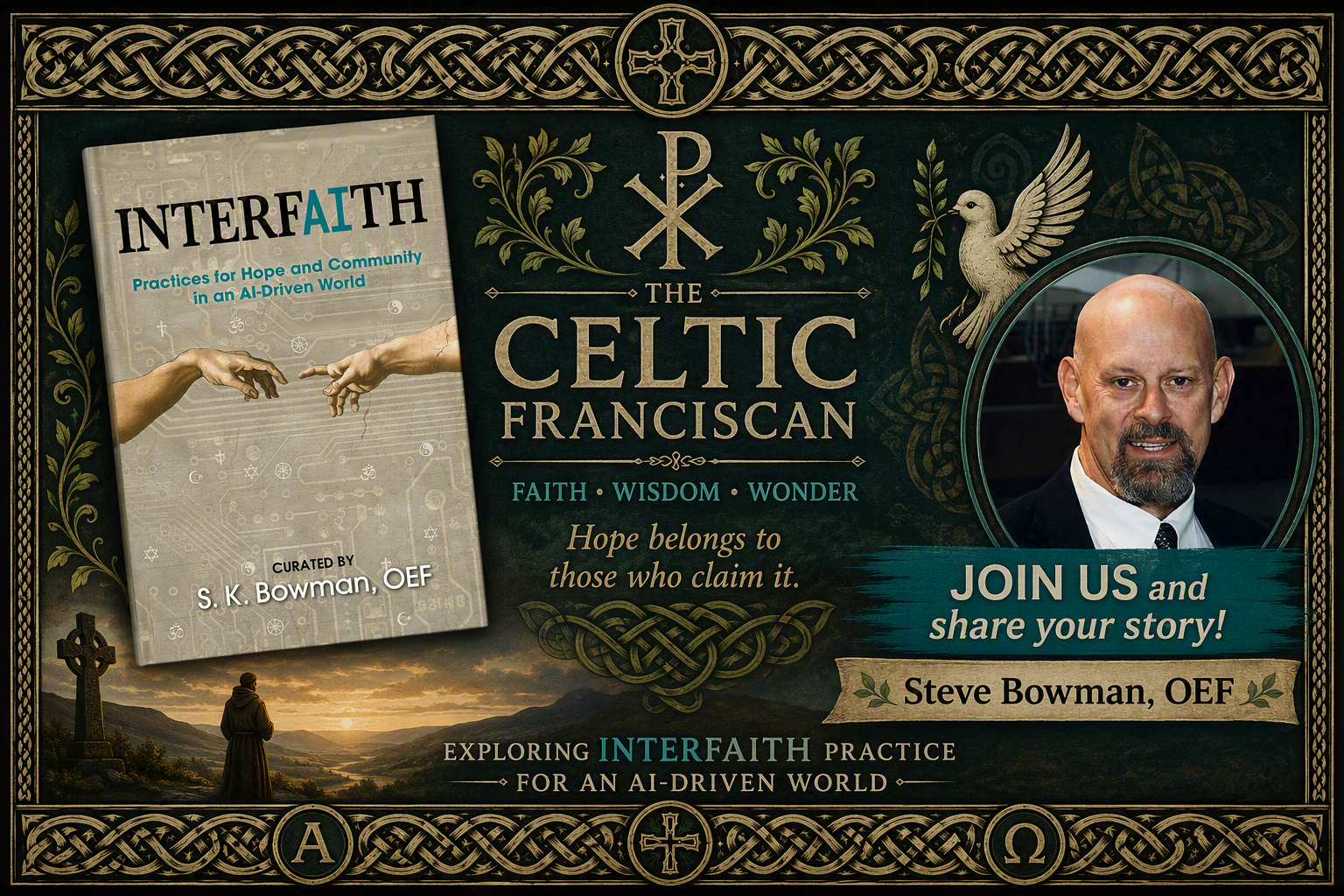
InterfAIth
Practices for Hope and Community in an AI-Driven World
Project Sapier grows from the same question at the heart of the InterfAIth anthology: How do we remain fully human while building machines that increasingly imitate us?
InterfAIth gathers stories and practices of hope, community, wisdom, presence, faith, and human flourishing across traditions. Project Sapier carries that conversation into boardrooms, leadership teams, and real-world AI decisions.
What keeps us human?
What happens when machines imitate human capacities?
How do we make wiser decisions about the technology we have created?
InterfAIth + Project Sapier Updates
Join the existing CelticFranciscan / InterfAIth community for book launch news, Project Sapier field notes, author conversations, and practical reflections on human flourishing in the age of AI.
Already using the InterfAIth launch-update form? Use the existing InterfAIth signup here.
Want to examine a real AI use case?
Start with one question: Where is AI touching a human being in your organization in a way that could affect their job, money, privacy, reputation, opportunity, safety, dignity, or relationship with you?