The One Who Simply Is
Before doctrines, denominations, arguments, and systems… there is mystery.
At the center of reality is not chaos.
Not emptiness.
Not violence.
But Being itself.
When Moses encounters God in the burning bush and asks for a name, the answer is strangely simple:
“I AM.”
Not I was.
Not I will become.
Not I compete.
Not I prove.
Simply: I AM.
The mystics and contemplatives have long recognized the depth hidden within those words. God is not merely another object within the universe. God is the ground of existence itself — the inexhaustible source from which all life continuously flows.
Everything participates in this gift of being.
The mountains.
The oceans.
The cities.
The lonely.
The joyful.
The grieving.
The saints and skeptics alike.
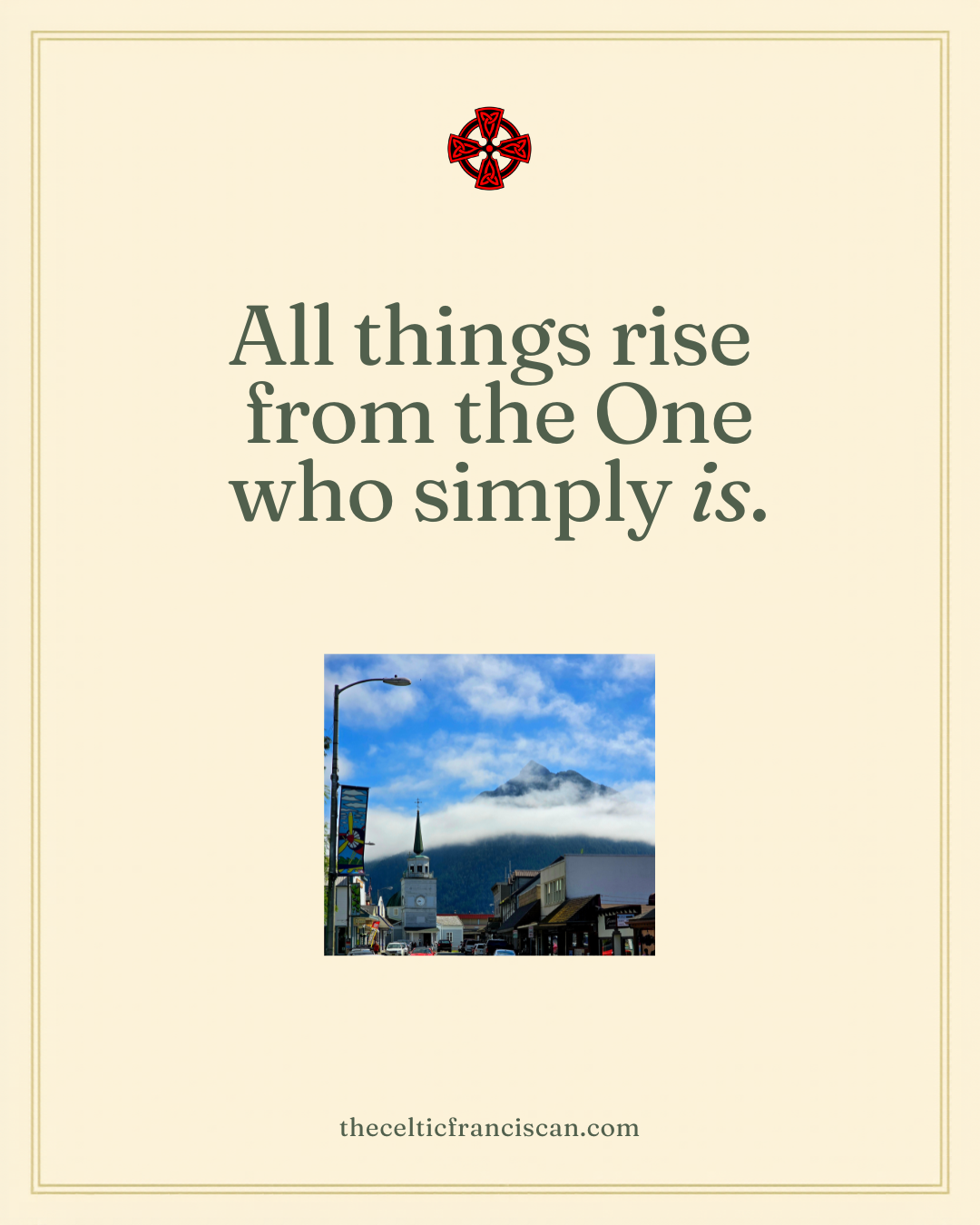
All things rise from the One who simply is.
The image above captures something contemplative and deeply Franciscan: a small town beneath immense mountains wrapped in mist. Human life continues quietly below while something vast and ancient surrounds it. It reminds us of proportion. We are small, but not insignificant. Temporary, but held within eternity.
Modern life makes it easy to forget this.
We become consumed with identity construction, productivity, tribal conflict, and digital noise. We anxiously curate ourselves as though existence were something we must constantly justify. But contemplation invites us back to something more foundational:
You do not sustain yourself into existence.
You are being sustained.
Every breath is received.
Every moment is gift.
Every act of love participates in something older and deeper than the ego.
This is why the contemplative life is not escapism. It is realism.
The mystics understood that suffering often comes from mistaking ourselves as isolated beings disconnected from the whole. We cling, strive, compare, and fear because we forget our rootedness in divine love.
As I’ve written elsewhere:
“We don’t exist because God is but because God loves us.”
That distinction matters.
The universe is not cold machinery accidentally producing consciousness. Creation itself emerges from generosity. The Franciscan worldview sees existence as fundamentally relational, participatory, and infused with meaning.
And perhaps this is one of the most important spiritual reminders in the age of artificial intelligence.
Machines process data.
God breathes being.
Technology can imitate language, but it cannot participate in the sacred mystery of existence itself. AI can calculate probabilities, but it cannot kneel in awe before a sunrise or tremble before beauty and grief intertwined.
Human beings can.
Contemplation teaches us to stop treating life as a problem to solve and begin receiving it as a mystery to inhabit.
The goal is not mastery over reality.
The goal is communion with it.
To live awake.
To live gratefully.
To live as though every ordinary moment is quietly sustained by Love itself.
Because it is.
Practice: Rest in Being
Today, practice resisting the urge to constantly prove, perform, or explain yourself.
- Sit in silence for ten minutes and simply breathe.
- Repeat slowly: “I am held in the One who is.”
- Spend time outdoors noticing the existence of things without labeling or analyzing them.
- Watch how often your mind tries to turn life into achievement or control.
- Offer gratitude for one completely ordinary moment today.
- In conversation, practice presence instead of preparing your next response.
- Ask gently: “What changes when I stop trying to manufacture worth and simply receive being as gift?”
The contemplative life begins when we learn to rest inside the mystery rather than conquer it.