The Soul Cannot Live on Fragmentation Alone
Postmodernism, Relativism, and the Hunger for Wholeness
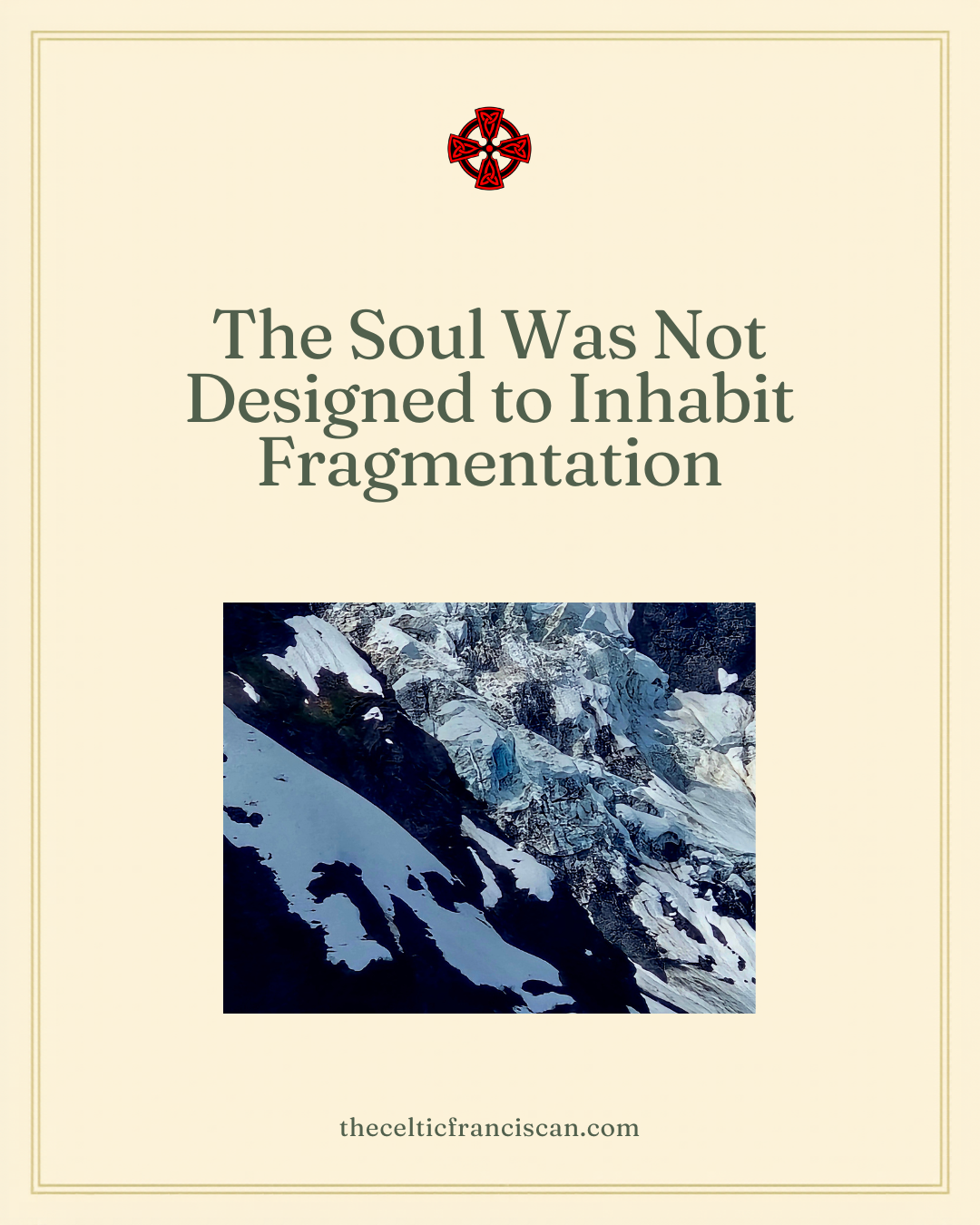
The soul was not designed to inhabit fragmentation.
That sentence may sound dramatic, but look around.
We live in fragments.
Fragmented attention.
Fragmented communities.
Fragmented identities.
Fragmented truth.
Fragmented politics.
Fragmented families.
Fragmented faith.
Fragmented inner lives held together by calendars, caffeine, passwords, and the occasional desperate prayer muttered in traffic.
Modern people are often overstimulated, over-informed, under-rooted, and spiritually exhausted. We have access to more perspectives than any generation in history, yet many of us feel less whole, less grounded, and less capable of trusting anything.
This is the strange gift and burden of the postmodern world.
Postmodernism taught us to be suspicious of easy certainty. And, frankly, some certainty needed suspicion.
It exposed false objectivity, hidden power, oppressive systems, inherited assumptions, and grand narratives that claimed to speak for everyone while often protecting the interests of the few. It reminded us that language is not innocent, institutions are not neutral, and every human being sees from somewhere.
Good.
Necessary.
Some idols needed a hammer.
But deconstruction alone cannot nourish the soul.
You can expose a false shelter and still need a home.
What Postmodernism Got Right
Before we dismiss postmodern thought as mere relativism or academic fog machines fueled by espresso and footnotes, we should admit something: it saw real problems.
It noticed that claims of “universal truth” have sometimes been used to silence local voices.
It noticed that “objectivity” often came from people with enough power to pretend they had no perspective.
It noticed that systems shape what people are allowed to see, say, question, and become.
It noticed that language can reveal, but it can also control.
It noticed that some stories liberate while others domesticate.
That matters.
A Franciscan should have no fear of this kind of critique. Francis of Assisi himself was a living critique of the power systems of his day. He questioned wealth, hierarchy, violence, clerical vanity, and the swollen ego dressed in religious costume. He did not burn the world down with cynicism, but he did stand barefoot before it and say, in effect, “There is another way.”
So yes, postmodernism was right to ask hard questions.
Who benefits from this story?
Who is excluded from this version of truth?
Whose voice is missing?
What pain has been hidden under polite language?
What system calls itself normal because it has never had to explain itself?
Those are not bad questions.
They are prophetic ones.
The Problem with Permanent Deconstruction
But there is a danger.
A culture can survive uncertainty. It cannot survive permanent cynicism.
If every claim to truth is only power, then truth itself becomes impossible to trust.
If every story is only manipulation, then meaning collapses.
If every tradition is only oppression, then memory becomes unusable.
If every community is only a social construction, then belonging becomes fragile.
If every identity is endlessly fluid, then the self becomes exhausted trying to constantly recreate itself.
If every sacred thing must be interrogated but never inhabited, then the soul becomes homeless.
Deconstruction can clear the ground. It cannot, by itself, plant a garden.
It can expose idols. It cannot teach us to worship.
It can reveal wounds. It cannot heal them.
It can identify false certainty. It cannot create wisdom.
It can dismantle a prison. It cannot build a monastery.
And the human soul needs more than escape.
It needs form.
The Hunger for Wholeness
Human beings were not made to live as isolated fragments of appetite, opinion, trauma, performance, and preference.
We need story.
Not propaganda.
Not domination.
Not nostalgia dressed up as faith.
But story large enough to hold suffering, joy, failure, forgiveness, death, and resurrection.
We need ritual.
Not empty performance.
Not religious theater.
Not spiritual busywork.
But embodied practices that return us to the sacred now and remind us who we are when our phones, fears, and false selves forget.
We need belonging.
Not tribalism.
Not ideological sorting.
Not group identity built on contempt for outsiders.
But community where we are known, corrected, forgiven, fed, and sent back into the world with love.
We need reverence.
Not superstition.
Not anti-intellectual retreat.
Not misty sentimentality with better lighting.
But the ability to stand before reality without immediately trying to use, label, own, or conquer it.
We need meaning.
Not certainty that crushes mystery.
Not relativism that dissolves truth.
But meaning encountered through humility, participation, contemplation, and love.
In other words, we need wholeness.
Franciscan Wholeness
Franciscan spirituality offers a way through fragmentation without pretending the questions are simple.
Francis did not solve the tensions of life by retreating into abstraction. He embodied an alternative.
He embraced poverty in a world obsessed with possession.
He embraced creation in a world tempted to exploit it.
He embraced lepers in a world that hid suffering outside the city.
He embraced peace in a world organized by violence.
He embraced humility in a church tempted by power.
He embraced joy in a life marked by pain.
Francis did not need the world to become simple before he could love it.
That may be one of his greatest gifts to us.
He lived in the tension without becoming cynical. He saw brokenness without surrendering to despair. He named corruption without losing tenderness. He knew the world was wounded, but he still called the sun brother and the moon sister.
That is not naïveté.
That is converted perception.
Franciscan wholeness does not come from denying fragmentation. It comes from learning to see all things held in the love of God.
AI and the New Fragmentation
Artificial intelligence now intensifies our postmodern condition.
It generates endless content.
It multiplies perspectives.
It simulates voices.
It blurs authorship.
It personalizes reality.
It gives each of us a tailored stream of information, desire, outrage, and distraction.
The result is not always enlightenment.
Sometimes it is fragmentation at scale.
We are increasingly surrounded by realities curated for us, optimized around us, and responsive to us. The danger is not only misinformation. The deeper danger is spiritual deformation.
If reality becomes whatever appears in my feed, whatever confirms my fear, whatever flatters my desire, whatever my preferred machine generates in a confident tone, then I am not becoming wise.
I am becoming enclosed.
The soul cannot flourish inside an algorithmic mirror.
It needs encounter.
It needs the face of the other.
It needs creation.
It needs silence.
It needs sacraments.
It needs the poor.
It needs people who do not agree with us but still bear the image of God.
It needs reality that does not bend instantly to preference.
What Comes After Fragmentation?
The answer is not a return to rigid certainty.
We do not need brittle systems that pretend every question has been settled.
We do not need nostalgia for a past that was far less whole than we imagine.
We do not need religious triumphalism, political absolutism, or intellectual arrogance.
The answer to fragmentation is not control.
The answer is communion.
Communion does not erase difference. It holds difference in love.
Communion does not require false agreement. It requires truthful presence.
Communion does not flatten mystery. It deepens participation.
Communion does not deny wounds. It brings them into the possibility of healing.
That is why Christian faith is not merely a set of ideas. It is a body. A table. A people. A shared bread. A common prayer. A way of life.
It is not enough to think our way out of fragmentation.
We must practice our way into wholeness.
Practices for a Fragmented Age
Begin simply.
Keep a small Sabbath, even if it starts as one quiet hour.
Eat one meal without a screen.
Pray before reacting.
Read something slowly.
Walk outside and let creation exist without needing to post it.
Call someone instead of merely liking something they shared.
Practice gratitude before analysis.
Listen to a person you are tempted to categorize.
Join a community where people know your name and your nonsense.
Serve someone who cannot advance your brand.
Return to silence.
Return to the body.
Return to the breath.
Return to the sacred now.
Return to love.
These are not small things. They are acts of resistance against fragmentation.
They are how the soul remembers itself.
The Soul’s True Home
The soul was not designed to inhabit fragmentation.
It was designed for communion.
Communion with God.
Communion with neighbor.
Communion with creation.
Communion with the wounded places within ourselves we would rather exile.
Communion with the poor, the forgotten, the inconvenient, and the real.
Postmodernism helped us see that some old certainties were false.
Good.
But now we must ask what comes next.
Not a return to arrogance.
Not a collapse into cynicism.
But a movement toward deeper humility, deeper belonging, deeper reverence, and deeper love.
A culture can survive uncertainty.
It cannot survive permanent cynicism.
And neither can the soul.
So let us be honest about fragmentation.
Then let us become people of repair.