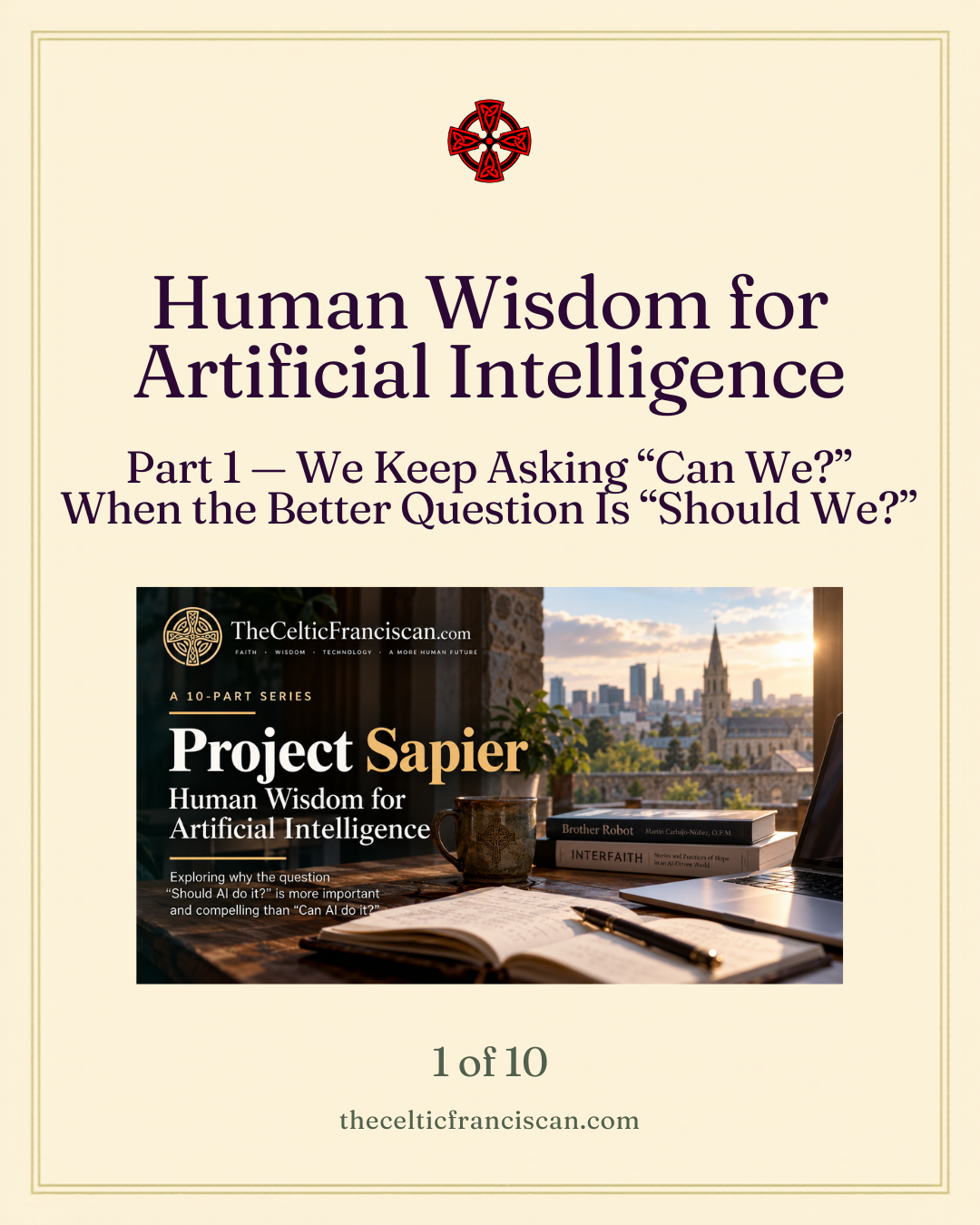
Human Wisdom for Artificial Intelligence
Part 1 — We Keep Asking “Can We?” When the Better Question Is “Should We?”
Artificial intelligence keeps making the question “Can we?” easier to answer. Can we automate this workflow? Can we replace this task? Can we predict this customer’s behavior? Can we have a machine draft the email, conduct the interview, tutor the child, counsel the employee, summarize the sermon, or make the recommendation? Increasingly, the answer is yes.
But technological capability is not the same thing as wisdom. One of the ideas that stayed with me from Martin Carbajo-Núñez, O.F.M.’s Brother Robot is the distinction between knowledge and phronesis, or practical wisdom. Phronesis is the ability to apply knowledge ethically and responsibly in real situations. It is not simply knowing what can be done. It is discerning what ought to be done.
That distinction sits at the heart of Project Sapier. The project is not anti-AI. I own a technology company, so that would make for some rather awkward Monday meetings. The deeper concern is whether our growth in artificial intelligence is being matched by growth in human judgment, responsibility, and discernment.
That is also where Project Sapier intersects with InterfAIth: Practices for Hope and Community in an AI-Driven World. InterfAIth asks what keeps us grounded, connected, hopeful, and human as technology accelerates. Sapier takes the next step and asks how leaders can carry those values into actual decisions about technology.
The central question is simple: AI may be able to do it, but should it?
Explore Project Sapier and the 15-Minute AI Examination:
https://thecelticfranciscan.com/project-sapier/