Language Is a Cage — and Also a Door
Wittgenstein, Whorf, and the Limits of Human Knowing
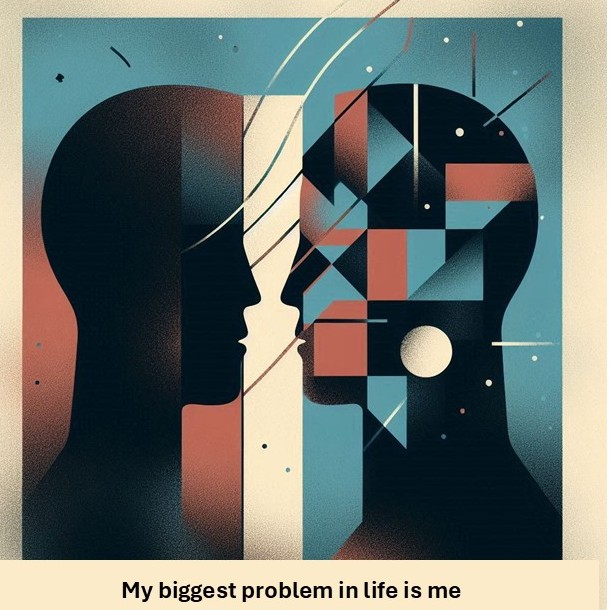
Language is a cage — and also a door.
That may be one of the strange blessings and burdens of being human.
We live by words. We name things, explain things, bless things, curse things, categorize things, defend things, and occasionally hide behind things. Words help us build worlds. They give shape to thought, memory, meaning, identity, culture, doctrine, prayer, and politics.
Without language, much of human life would collapse into immediacy.
But language is not innocent.
Words reveal.
Words conceal.
Words heal.
Words wound.
Words liberate.
Words imprison.
A single word can open a heart.
A single label can close one.
The philosopher Ludwig Wittgenstein famously wrestled with the limits of language. Benjamin Lee Whorf explored how language shapes perception itself. Mystics, long before either of them had tenure or footnotes, knew the same problem by prayer: words can carry us toward reality, but they cannot contain it.
Eventually, the deepest truths begin to overflow the sentences that first helped us find them.
Mystics eventually fall silent not because reality is empty, but because language becomes too small.
Words Shape the World We Think We See
We do not simply use language. We are formed by it.
The words we inherit teach us what to notice, what to ignore, what to fear, what to desire, what to call normal, what to call dangerous, what to call holy, and what to call impossible.
Language does not merely describe the world. It frames the world.
Say “consumer” long enough, and a person becomes an appetite.
Say “user” long enough, and a person becomes an interface.
Say “market” long enough, and community becomes competition.
Say “content” long enough, and wisdom becomes product.
Say “engagement” long enough, and attention becomes currency.
Say “efficiency” long enough, and slowness begins to feel like sin.
Say “my enemy” long enough, and a human face becomes a category.
This is how language becomes a cage.
Not because words are bad, but because words can become invisible walls. We mistake the map for the country, the label for the person, the doctrine for the encounter, the slogan for the truth, the argument for the mystery.
And then we wonder why the soul feels trapped.
The Prison of Inherited Categories
Every age has its preferred vocabulary.
Our age speaks fluently in optimization, branding, platform, productivity, disruption, identity, scale, influence, monetization, and performance.
Some of these words are useful. Some are necessary. Some pay the bills. A Franciscan with a mortgage should not pretend otherwise.
But when these words become the only way we interpret life, they quietly colonize the soul.
We begin to ask:
How do I scale this?
How do I monetize this?
How do I optimize myself?
How do I manage my image?
How do I increase engagement?
How do I make my life more efficient?
Those questions are not always wrong.
But they are not ultimate.
The soul has different questions:
What is real?
What is holy?
What is mine to do?
Who is my neighbor?
Where is love asking me to surrender?
What grief have I not allowed myself to feel?
What beauty have I rushed past?
What silence is waiting beneath my noise?
Where is God already present?
A language of productivity cannot answer a question of presence.
A language of control cannot answer a question of love.
A language of branding cannot answer a question of being.
Algorithms and the New Babel
The danger deepens in the age of artificial intelligence.
Algorithms do not merely deliver language. They shape the language we see, repeat, trust, imitate, and eventually become.
Our feeds train us in certain emotional dialects.
Outrage has a vocabulary.
Tribalism has a vocabulary.
Consumerism has a vocabulary.
Cynicism has a vocabulary.
Fear has a vocabulary.
Contempt has a vocabulary.
And, increasingly, machines can generate all of it faster than wisdom can digest.
Artificial intelligence can produce endless words. It can summarize theology, generate prayers, imitate compassion, draft apologies, compose arguments, and manufacture convincing spiritual language.
That can be useful.
It can also be dangerous.
Because spiritual-sounding language is not the same as spiritual transformation.
A generated prayer is not the same as surrender.
A theological summary is not the same as wisdom.
A simulated conversation is not the same as communion.
A machine may generate words about love, but it cannot love. It can speak of silence, but it cannot enter silence. It can imitate awe, but it cannot tremble before the mystery of God.
This is why the question is not simply, “Can AI produce language?”
Of course it can.
The deeper question is, “What kind of language is forming us?”
And even deeper: “Are we still capable of silence?”
The Word Beyond Words
Christian faith has always had a complicated relationship with language.
On one hand, it is a religion of the Word.
“In the beginning was the Word.”
God speaks creation into being. Prophets speak truth to power. Psalms give language to grief, rage, praise, longing, confession, and wonder. Jesus teaches in parables. The gospel is proclaimed. The church prays, blesses, sings, and remembers.
Words matter.
But Christianity also knows that God exceeds words.
The Word became flesh, not merely text.
That should stop us.
God’s fullest self-expression was not a concept, slogan, theory, system, or argument. God’s fullest self-expression was a person. A body. A life. A table. A wound. A death. A resurrection.
The Word became flesh because language alone was not enough.
This is the mystery at the heart of Christian contemplation: words can point toward God, but they cannot possess God.
Doctrine can guide us.
Prayer can open us.
Scripture can form us.
Theology can clarify us.
Preaching can awaken us.
But at some point, love must become embodied.
At some point, language must become mercy.
At some point, truth must become flesh in us.
Why Mystics Fall Silent
The mystic does not despise language. The mystic simply knows its limits.
Words are like boats. They can carry us across water, but they are not the shore.
Words are like windows. They can let in light, but they are not the sun.
Words are like icons. They can reveal presence, but they are not the presence itself.
This is why contemplative traditions speak of silence, stillness, unknowing, darkness, and wordless prayer.
Not because there is nothing to say.
Because there is too much.
The closer we come to mystery, the more language becomes both necessary and inadequate. We need words to begin. We need silence to continue.
The apophatic tradition — the way of unknowing — reminds us that God is not captured by our definitions. Every true word about God must eventually bow before the God who exceeds it.
God is love.
Yes.
And yet God is more than what I mean by love.
God is light.
Yes.
And yet God is more than what I mean by light.
God is Father, Mother, Shepherd, Fire, Breath, Rock, Word, Silence, Beauty, Justice, Mercy.
Yes.
And yet God is always more.
The moment I think my language has contained God, I have likely stopped worshiping God and started worshiping my sentence about God.
That is how language becomes an idol.
Silence as Freedom
Contemplation does not reject language.
It frees us from being possessed by language.
Silence gives us room to notice the words that have been running our lives without permission.
Words like:
failure, success, enemy, worthless, productive, important, useless, behind, superior, inferior, unforgivable, abandoned, unlovable.
In silence, these words rise.
And in the loving presence of God, we begin to ask:
Who taught me this word?
Is it true?
What has it done to my soul?
What reality has it hidden?
What love has it blocked?
What word might God be speaking beneath it?
Sometimes healing begins when a false word loses authority.
Sometimes conversion begins when a better word arrives.
Beloved.
Forgiven.
Free.
Enough.
Held.
Sent.
Known.
Mine.
The soul lives or dies by the names it trusts.
Franciscan Speech
Francis of Assisi understood the poverty of language.
He preached, yes. He sang, yes. He gave us prayers and praises. But his truest language was his life.
He spoke poverty by owning little.
He spoke peace by refusing violence.
He spoke kinship by naming the sun brother and the moon sister.
He spoke humility by embracing lepers.
He spoke joy by living lightly.
He spoke Christ by becoming small enough for love to pass through him.
Franciscan speech must therefore be more than correct religious vocabulary.
It must be embodied.
Words about peace mean little from a clenched fist.
Words about humility mean little from a platform of self-importance.
Words about creation mean little from a life of careless consumption.
Words about love mean little without actual tenderness toward actual people.
In the Franciscan way, language becomes credible when it becomes flesh.
A Practice for the Week
Try this simple practice.
Choose one word that has been shaping your inner life.
It might be “hurry.”
It might be “failure.”
It might be “control.”
It might be “enemy.”
It might be “enough.”
It might be “beloved.”
Sit quietly with that word for five minutes.
Do not analyze it aggressively. Just notice.
Where do you feel it in your body?
What memories come with it?
What emotions rise?
Does this word open your soul or close it?
Does it lead you toward love or away from love?
Does it reveal reality or distort it?
Then sit in silence.
Ask God for the truer word beneath the word.
Do not force an answer.
Let silence do its work.
The Door
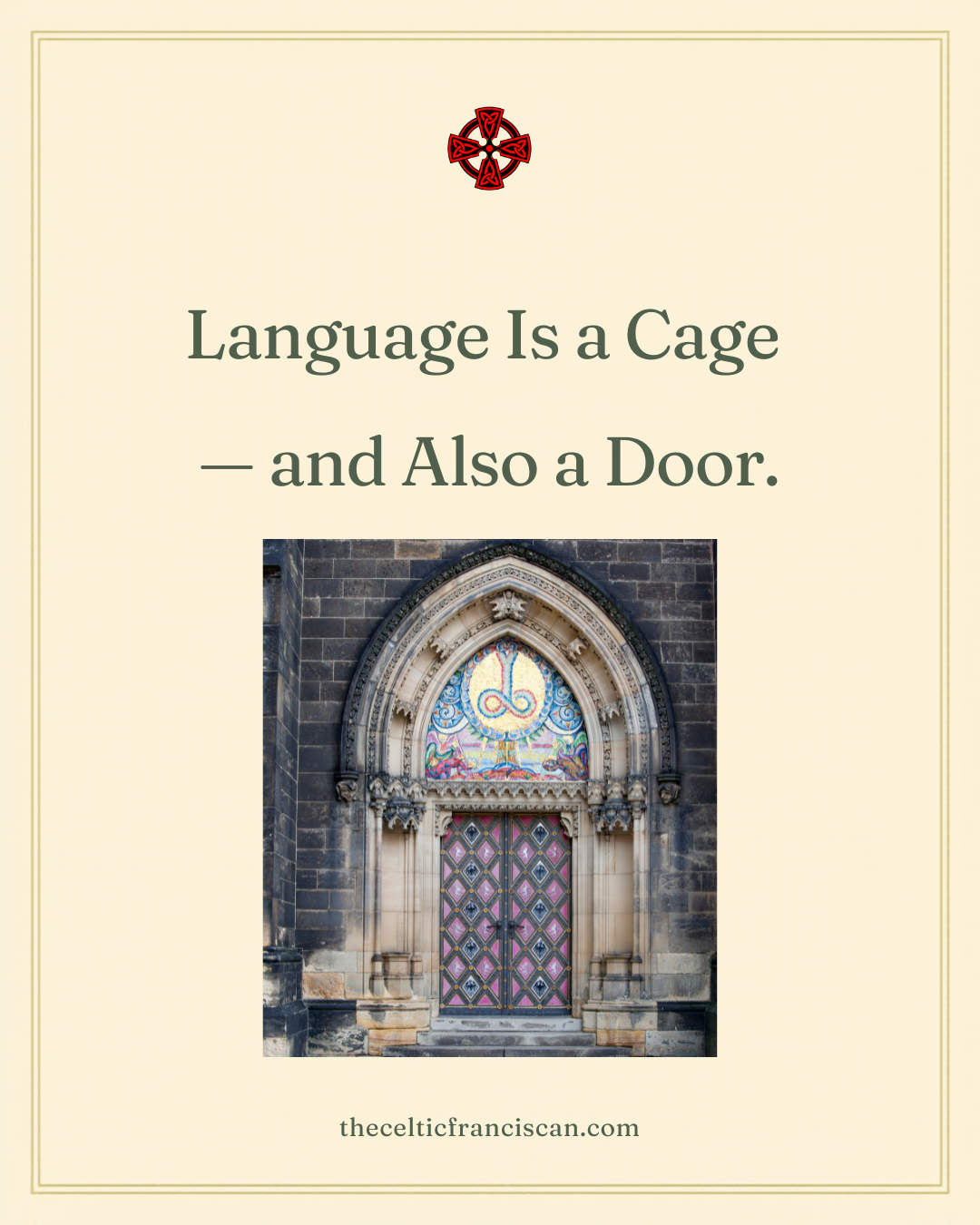
Language is a cage — and also a door.
It becomes a cage when we mistake words for reality, labels for people, slogans for wisdom, ideology for truth, and religious language for actual love.
It becomes a door when it opens us toward encounter.
A poem can become a door.
A prayer can become a door.
A story can become a door.
A confession can become a door.
A name spoken with love can become a door.
A single word from God can become a door.
But every door is meant to be walked through.
So let us use words carefully. Let us speak truthfully. Let us resist the language of contempt, consumption, and control. Let us bless more than we brand. Let us listen more than we label. Let us be suspicious of any sentence that makes it easier to hate our neighbor.
And then, when words have done all they can do, let us become quiet.
Not because reality is empty.
Because it is full.
Not because there is nothing left to say.
Because love is asking to become more than speech.
Mystics eventually fall silent not because reality is empty, but because language becomes too small.
And in that silence, the cage may become a door.