The Power of Ritual: Reconnecting in a Disconnected Age
There is something deeply human about gathering together in rhythm.
A concert.
A liturgy.
A chant.
A shared meal.
A candle lit in silence.
Ritual gathers what chaos scatters.
In an age shaped by algorithms, acceleration, and artificial intimacy, we are tempted to believe efficiency is enough. We optimize schedules but neglect souls. We collect followers while forgetting how to be present to one another. We consume endless streams of content while starving for communion.
But human beings were never meant to live only by information.
We are formed by participation.
That is why rituals matter.
Every sacred practice — prayer, singing, Eucharist, meditation, pilgrimage, shared silence — interrupts the machinery of distraction and reminds us we belong to one another. Ritual slows us down long enough to remember what is real. It reconnects body, spirit, memory, and community. As I’ve written elsewhere, “Ritual converts chaos to cosmos.”
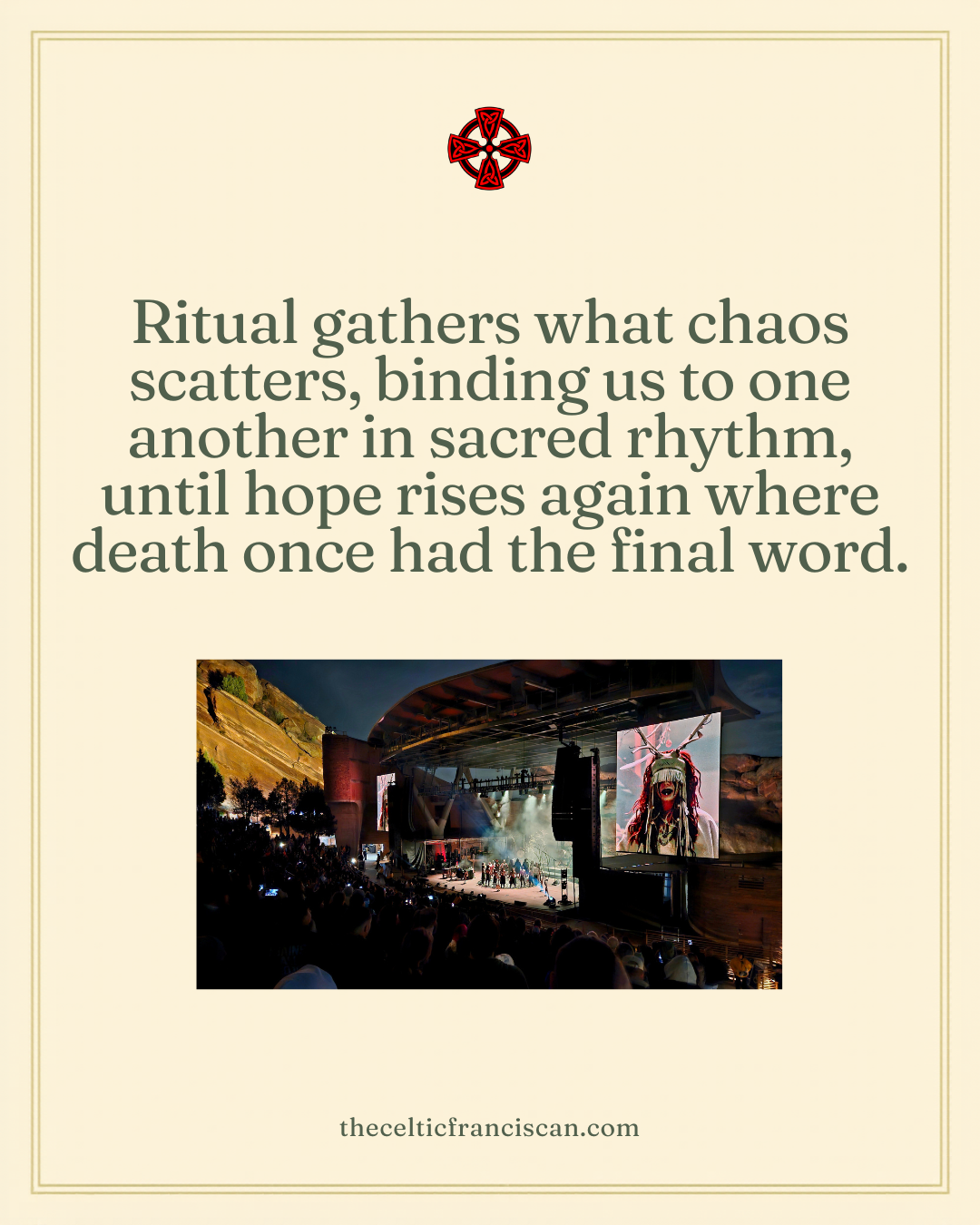
The image above captures more than a performance. It captures transcendence through gathering. Thousands facing the same direction. Light piercing darkness. Music creating shared emotional space. Human beings remembering, even briefly, that we are not alone.
The ancient traditions understood something modern culture often forgets:
All ceremonies are for the purpose of movement.
Ritual moves us from isolation toward belonging.
From noise toward meaning.
From fragmentation toward hope.
The Celtic Christian tradition spoke of “thin places” — moments where the veil between heaven and earth feels unusually near. These moments rarely arrive through control or optimization. They emerge through presence, attention, vulnerability, and shared experience.
In the AI age, this matters more than ever.
Artificial intelligence can simulate conversation, generate images, and mimic empathy. But it cannot participate in sacred presence. It cannot suffer with us, sing with us, mourn with us, or love with embodied vulnerability. Machines can process information. Only people can offer communion.
This is why intentional practices and intentional communities are no longer optional luxuries. They are spiritual resistance.
The Iona Community describes itself as “intentionally scattered, regularly gathered,” rooted through common prayer and reflective practice. That phrase has stayed with me because it names exactly what many of us hunger for today: rhythms that reconnect us before the world tears us apart again.
Hope does not survive on information alone.
Hope survives through shared practices.
So light candles.
Share meals.
Pray together.
Sing loudly.
Turn off the noise long enough to hear one another breathe.
Because ritual still gathers what chaos scatters.
And where people gather in love, hope rises again where death once believed it had the final word.