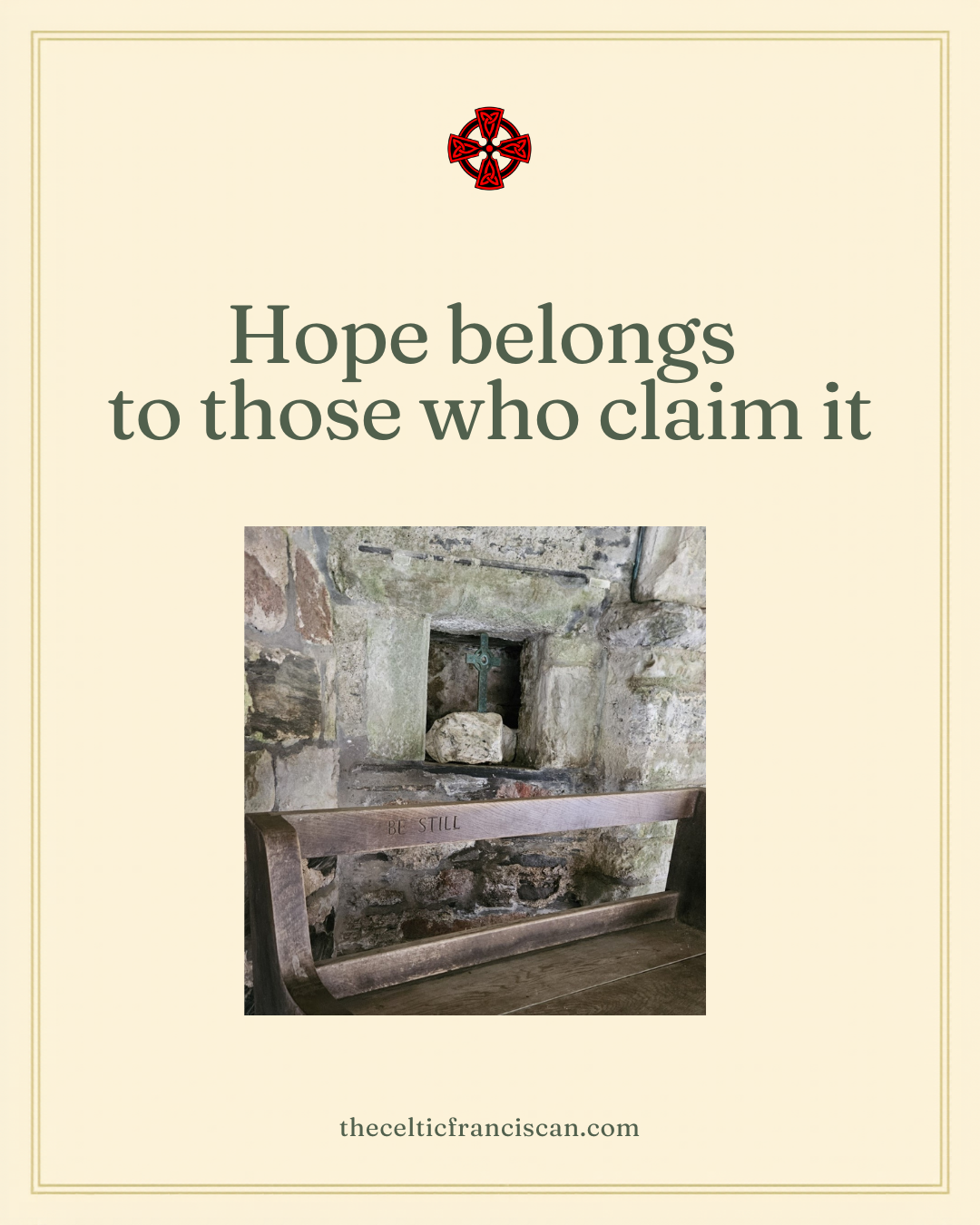
Hope Belongs to Those Who Claim It
Hope is not passive or automatic. It is something we choose, especially when circumstances give us every reason not to.
Hope belongs to those
who claim it.
Not to those who wait for it.
Not to those who feel it naturally.
Not to those whose circumstances make it easy.
Hope is not something that arrives on its own.
It is something we choose.
And that choice is not always comfortable.
Because hope often shows up
when there is little evidence for it.
When things feel uncertain.
When outcomes are unclear.
When the future does not look the way we expected.
In those moments, hope can feel fragile.
Almost irrational.
But real hope is not naive optimism.
It does not deny reality.
It does not pretend everything is fine.
It sees clearly—
and still chooses to believe that something meaningful is possible.
That what we do matters.
That love still matters.
That people still matter.
Hope is an act of will.
A decision to remain open
when it would be easier to close.
A decision to move forward
when it would be easier to withdraw.
A decision to trust
when control has already failed.
This is why hope is not passive.
It is participatory.
It asks something of us.
To step toward life.
To remain present.
To keep choosing what is good—
even when the outcome is not guaranteed.
So the question is not:
“Do I feel hopeful?”
It is:
“Will I choose hope here?”
Because hope does not belong to the fortunate.
It belongs to those who claim it.
CTA:
→ Where do you need to choose hope today?